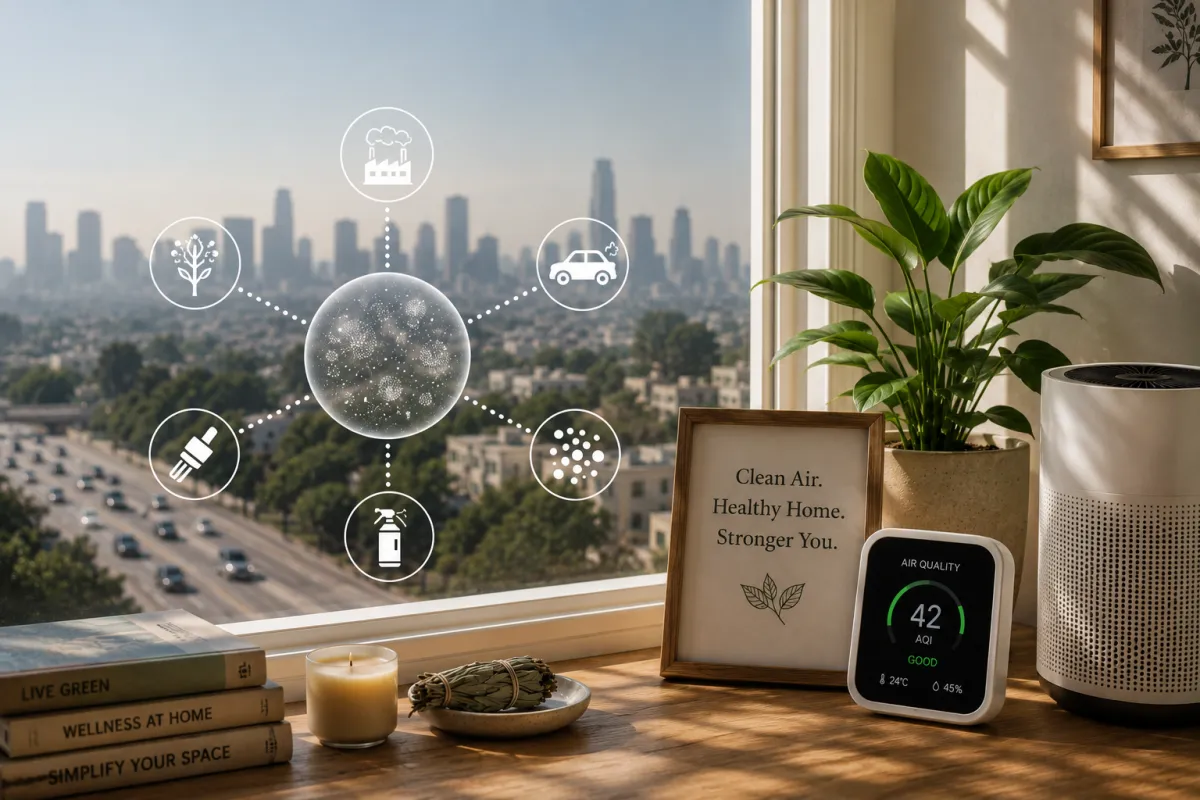
What's Really in Your Air: Understanding Airborne Toxins and Their Impact on Your Health
What's Really in Your Air: Understanding Airborne Toxins and Their Impact on Your Health
Air pollution is a well-documented health concern. What is less often discussed is the full picture of what that pollution contains.
Looking Beyond Air Pollution
Peer-reviewed research published in the International Journal of PIXE (2019) confirmed that jet fuel contains measurable concentrations of metals including aluminum, lead, barium, and titanium, and that particles emitted from jet engines fall into the ultrafine range, smaller than 100 nanometers, meaning they are small enough to be inhaled deeply into lung tissue.
A 2021 review published in Environmental Health concluded that jet engine emissions carry health effects comparable to diesel exhaust particles.
A Broader Conversation
The history of intentional atmospheric programs in the United States is also documented.
Between 1949 and 1969, the US Army conducted 239 open-air tests of biological and chemical agents over American cities, a fact revealed in Senate subcommittee hearings in 1977 and confirmed by a National Academies Press assessment in 1997.
The 1996 US Air Force research paper Weather as a Force Multiplier: Owning the Weather in 2025 laid out the technological vision for atmospheric modification.
As of 2023, more than 314 weather modification patents are listed with the US Patent and Trademark Office.
More recently, multiple states, including Florida and Tennessee, have passed legislation specifically banning or regulating weather modification and solar geoengineering activities, reflecting a growing acknowledgment at the legislative level that these activities are real and consequential.
What We Know
We don't have all the answers about exactly what is in the air at any given time or place.
What we do know is that the air we breathe is a legitimate source of toxic exposure, and supporting the body's ability to clear airborne particles through sinus rinsing, binders, and open drainage pathways is a reasonable and practical response.
Where Do You Start?
The goal isn't to live in fear of the environment around you.
Instead, focus on practical, reasonable steps that help reduce your overall toxic burden while supporting your body's natural detoxification systems.
Understanding where your exposures may come from allows you to make informed decisions about your health and the health of your family.
Ready to Take the Next Step?
