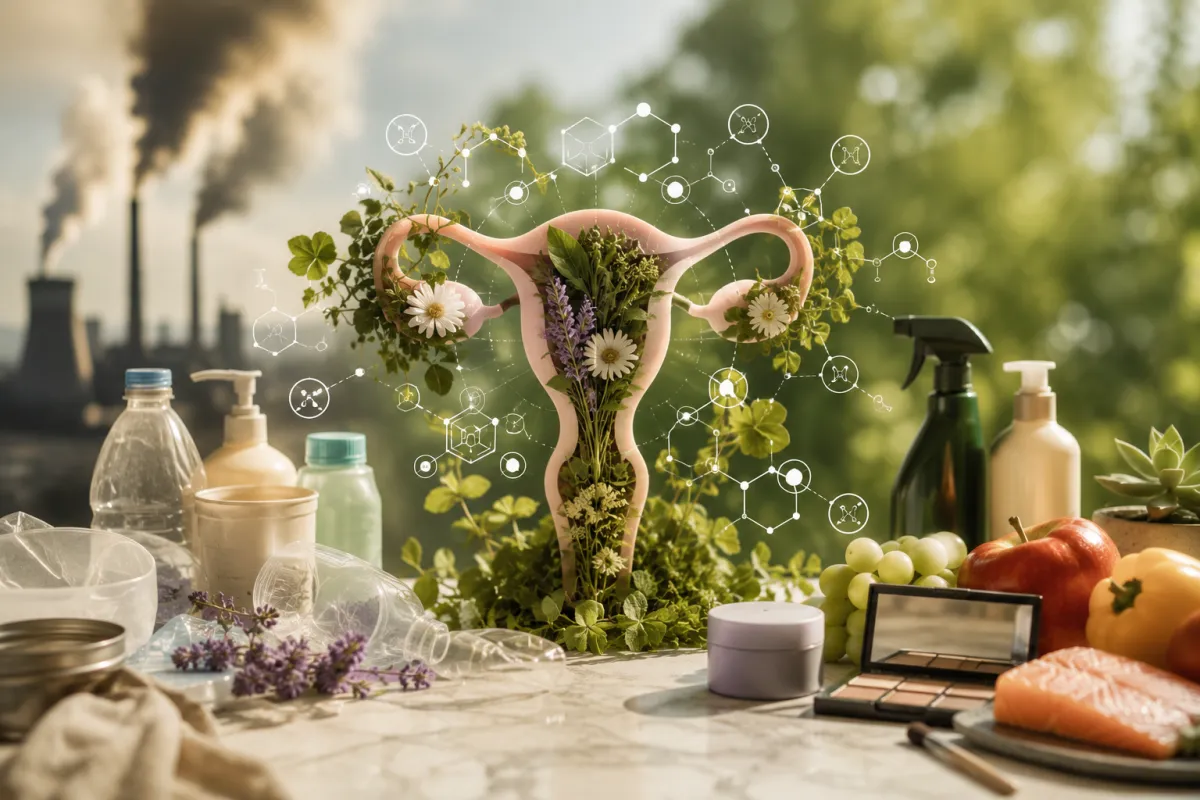
What Toxins Do to a Woman's Body: How Environmental Toxins Affect Hormones & Fertility
Women accumulate toxins differently than men, and the consequences are different too.
Estrogen and many environmental toxins share a structural similarity.
Chemicals like BPA, phthalates, pesticides, and certain heavy metals can mimic estrogen in the body, bind to estrogen receptors, or interfere with estrogen metabolism.
The result is estrogen dominance, a condition where estrogen is disproportionately high relative to progesterone.
Symptoms include painful or heavy periods, PMS, mood instability, weight gain around the hips and thighs, and difficulty losing weight.
The liver is responsible for metabolizing and clearing estrogen. When the liver's drainage is impaired by toxic burden, estrogen recirculates rather than being eliminated.
This creates a cycle where toxins worsen estrogen dominance, and estrogen dominance slows the liver's ability to clear toxins.
What Crosses the Placenta
This is the conversation most women are not having with their doctors, and it is one of the most important ones.
Research has confirmed that a wide range of environmental toxins cross the placental barrier and reach the developing baby.
These include mercury, lead, phthalates, pesticides, PCBs, and flame retardants. The placenta was once thought to be a protective filter.
We now know it is permeable to many of the chemicals that are most prevalent in modern life.
The implications for the developing brain, immune system, and microbiome are significant.
A baby's detoxification systems are immature at birth, which means toxins that cross during pregnancy or are transferred through breast milk have a longer residence time in the baby's body than they would in an adult.
Mercury from amalgam fillings is a particularly important conversation for women who are pregnant or planning to become pregnant.
Mercury transfer through both the placenta and breast milk is documented.
This is not a reason to panic, but it is a reason to be informed and to work with a practitioner who understands detox and drainage before, during, and after pregnancy.
The Case for Pre-Conception Detox
If you are planning to become pregnant, the time to support your body's drainage and reduce your toxic burden is before conception, not after.
This is not about achieving a perfect body or an impossible standard of cleanliness.
It is about reducing the load you pass on, supporting your mitochondria so they can sustain the enormous energy demands of pregnancy, and giving your baby's developing microbiome the best possible starting conditions.
A thoughtful, drainage-first approach to pre-conception support, one that opens the colon, liver, and lymphatic pathways gently and progressively, is something we walk through in the GRO Program at Discover Health.
Ready to Take the Next Step?
